
Cultural Injustice: A Journey To Change The Future
|
Though President Gerald Ford officially recognized Black History month in 1976, Carter G. Woodson established Negro History week in 1926. Dr. Woodson believed it important to provide a theme to focus public attention that merited emphasis during the week, while President Ford challenged the public to “seize the opportunity to honor the too-often neglected accomplishments of Black Americans in every area of endeavor throughout our history.” Thus, each year American presidents have recognized a particular theme to highlight during Black History month. This year’s theme is “Black Resistance,” which describes the ways African Americans have challenged past and ongoing repression including the racial violence of lynchings, racial persecution and police killings that have existed since the inception of this nation.
Black institutions of faith were gathering places for many resistance efforts throughout the years. Faith leaders inspired participation in resistance movements and these spaces provided sanctuary during times of crisis. Historically,
media outlets in the form of newspapers published content relevant to the issues of the day, but in today’s world, optimal outlets have changed to podcasts, radio shows and blogs.
Black medical professionals established
nursing schools, hospitals and clinics to train and provide care to the community that was often unavailable at mainstream medical institutions. Historically Black Colleges and Universities were founded by white Northern philanthropists.
In addition to their obvious role in providing opportunities for higher education to the African American population, students at HBCUs had pivotal roles to play in the Civil Rights, Black Power and social justice movements. These
movements have led to improvements in quality of life and improved access to political power. John Lewis provided perspective when he said “Our struggle is not the struggle of a day, a week, a month, or a year, it is the struggle of
a lifetime. Never, ever be afraid to make some noise and get in good trouble, necessary trouble.”
Black people, through their resistance, have seen the end of slavery, racial segregation, and increases in political representation
in government. The resistance strategies used in the Civil Rights struggle have been a model for other social justice movements, highlighting their importance. President Obama remarked in the 2016 celebration of Black History month,
“As we mark the 40th year of National African American History Month, let us reflect on the sacrifices and contributions made by generations of African Americans, and let us resolve to continue our march toward a day when every person
knows the unalienable rights to life, liberty and the pursuit of happiness.”
Dr. Edward Cornwell described the journey of surgeon scientist Dr. Charles Drew at the Southern Surgical Association History of Medicine Scholarship
Presentation. This illuminating presentation was published in the Annals of Surgery (Ann Surg 2006;243: 612–618) and is available through this link.
|
| 1856 | | Dr. Alexander T. Augusta received his Bachelor of Medicine from the University of Toronto. Dr. Augusta would go on to become the first black professor of medicine in the United States. | 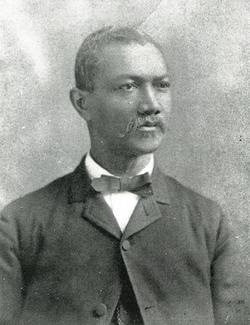 |
| 1891 | | A true medical marvel, Dr. Daniel H. Williams, MD would open the first black-owned hospital in America. Provident Hospital and Training School for Nurses not only educated black American's, it also provided essential care to the black community in Chicago, IL. | 
|
| 1933 | | After being rejected from 2 U.S. medical schools, Charles R. Drew would graduate from McGill in Canada. Dr. Drew dedicated his life’s work to blood preservation and established the blood donor process as we know it today. Despite his contributions to blood preservation, Dr. Drew was a surgeon and mentor at heart. He was appointed chairman of the department of surgery and chief of surgery at Freedmen’s Hospital (now known as Howard University Hospital) in Washington, D.C. While at Howard University Hospital, Dr. Drew dedicated his time to mentoring those pursing careers in medicine. Dr. Drew's humility and commitment to training physicians would be a legacy in modern day medicine. | 
|
| 1943 | | Dr. Myra A. Logan, MD would graduate from medical school in 1933 from Harlem Hospital. Dr. Logan was the first woman to perform heart surgery in 1943. Dr. Logan would go on to advance the detection and treatment of breast cancer. |  |
| 1961 | | Dr. Samuel Lee Kountz was the first African American to graduate from the University of Arkansas in 1958. He would go on to perform the first kidney transplant in 1961 between two unrelated people. Much of his work and research in organ donation and preservation has contributed to the field today. |  |
| 1964 | | Dr. Jane C. Wright graduated from New York Medical College in 1945. Dr. Wright worked alongside her father at Harlem Hospital in the field of cancer research and development. Dr. Wright's work would lead to develops in cancer treatment as we know them today. In 1967 Dr. Wright was named the Associate Dean of Surgical Research at NYU. Dr. Wright's career would lead her to be appointed to the resident's Commission on Heart Disease, Cancer, and Stroke. in 1964.
| 
|
| 1971 | | Dr. Betty Smith Williams was the first black woman to graduate from Frances Payne Bolton School of Nursing in Cleveland, OH. She would go on to become the first black woman to serve in a faculty/teaching role in the state of California. From Dr. Williams years of teaching and practice she saw a need to support and engage other black nurses in the nursing profession and beyond. In 1971 Dr. Williams co-founded the National Black Nurses Association, an organization dedicated to advocating for access to healthcare, etc within minority communities. | 
|
| 1981 | | Dr. Alexa Canady became the first black female neurosurgeon in the United States in 1981. A true pioneer of her time, Dr. Canady would go on to use her talent and pursue her passion as a surgeon by serving as the Chief of Neurosurgery Surgery from 1987-2001 at Children's Hospital of Michigan. |  |
| 1993 | | Dr. Jocelyn Elders became the first black American appointed to serve as the US Surgeon General in 1993. Dr. Elders appointment would come years after facing racial discrimination throughout her educational career. Initially, Dr. Elders career goal was to become a lab technician as she had a love for the sciences. However, she was inspired by another trailblazer, Dr. Irby Jones, which sparked her ambition to pursue a career as a physician herself. Not only would Dr. Elders accomplish her goals, she would go on to exceed them in many ways both, as a Professor, Physician, and Politician. |  |
| 2011 | | Dr. Olivia J. Hooker was a survivor of the Tulsa Race Massacre of 1921. At just six years old, Dr. Hooker would experience one of the most deadly racial attacks in the US. Dr. Hooker would go on to enlist in the Coast Guard, serving as one of the first African American women in active duty. In 1961 Dr. Hooker received her Ph.D. in Psychology thus dedicating her life to caring for and supporting people with development disabilities. In 2011 Dr. Hooker was awarded the American Psychological Association Presidential Citation. | 
|
| 2012 | | In 2012 Dr. Hadiyah-Nicole Green graduated from The University of Alabama at Birmingham with a Ph.D. in Physics, serving as one of the few African American women in the field. Dr. Green has dedicated her career to cancer research and treatment, which was inspired by her late "Auntee" Ora Lee Smith. Today Dr. Green continues her research and teaching as the Assistant Professor of Surgery at Morehouse School of Medicine in Atlanta, Georgia.
| 
|
Help Us Celebrate Black Heroes
We want honor and celebrate the lives and contributions of Black people in our communities. Join us by submitting the form
here for the Black heroes in your life. We will share their stories on ATS social media throughout the month of February. Please email a photo to be shared with the post to
mriley@amtrauma.org.
Resources


References
https://www.blackpast.org/african-american-history/augusta-alexander-t-1825-1890/
https://www.nps.gov/foth/learn/historyculture/alexander-augusta.htm
https://columbiasurgery.org/news/daniel-hale-williams-and-first-successful-heart-surgery
https://www.facs.org/media/mannxtui/04_daniel_hale_williams.pdf
https://www.cdrewu.edu/about-cdu/about-dr-charles-r-drew
https://www.acs.org/education/whatischemistry/african-americans-in-sciences/charles-richard-drew.html
https://www.nymc.edu/school-of-medicine-som/som-alumni-profiles/alumni-in-memorium/myra-adele-logan/
http://www.allianceofminorityphysicians.org/logan-family.html
https://cfmedicine.nlm.nih.gov/physicians/biography_336.html/
https://www.nymc.edu/school-of-medicine-som/som-alumni-profiles/alumni-in-memorium/jane-cooke-wright/
https://www.blackpast.org/african-american-history/kountz-samuel-lee-jr-1930-1981/
https://chaamp.virginia.edu/node/4146
https://oralee.org/drgreen/
https://www.rochester.edu/2020-celebration/olivia-hooker/
https://en.wikipedia.org/wiki/Olivia_Hooker
https://www.apadivisions.org/division-35/about/heritage/olivia-hooker-biography
https://www.phillymag.com/healthcare-news/2020/08/08/ala-stanford-black-doctors-covid-19-consortium/
https://nursing.wcui.edu/blog/honoring-african-american-leaders-in-the-nursing-world/
If you have questions, please contact ATS National Office at 1-800-556-7890 or info@amtrauma.org
 Print Page


